October 6, 2026
What to Know Before You Hire a Plumber Kona Homeowners Can Trust
By @judahbhqa373
Hiring a plumber is one of those decisions that feels routine until it is not. A slow leak under the sink, a backed-up drain, a water heater that suddenly quits, or a sewer issue that will not wait until next week can turn a normal day into an expensive one fast. In Kona, where homeowners often rely on local tradespeople for both urgent repairs and long-term property maintenance, the right hire matters for more than convenience. It affects safety, legal compliance, workmanship, and how much trouble you are buying for yourself later.
A lot of people start the same way. They type “plumber near me” into a search bar, scan a few reviews, and call the first company that answers. That is understandable, especially when water is pooling where it should not be. But plumbing is one of those trades where the details matter. A lower estimate, a quick promise, or a friendly voice on the phone does not tell you whether the person doing the work is properly qualified for the job.
For Kona homeowners, the first thing to understand is simple and important: in Hawaii, plumbing is a licensed profession. A person may not act or hold themselves out as a plumber without a license, and plumbing work must generally be performed by a licensed journey worker plumber or master plumber. Apprentices and helpers may work only under supervision. That alone should shape how you evaluate any plumber Kona residents are considering, whether the job is a routine fixture replacement, drain cleaning, water heater repair, or a larger project involving sewer line repair or commercial plumbing installation.
Why licensing matters more than many homeowners realize
When people hear “licensed,” they sometimes think of it as paperwork, a box to check. In plumbing, it is much more than that. Licensing is one of the clearest signals that the work is being done within the rules that govern the trade in Hawaii. It also ties into broader state oversight, because electrical and plumbing contractors must employ licensed electricians and plumbers to perform the actual work.
That distinction matters when you are talking to a company. Some businesses market broadly, but the real question is who will be performing the plumbing on your property. A well-run company should be able to answer that clearly, without hedging or talking around it. If the explanation gets vague, or if you hear phrases that suggest unlicensed labor will handle the core plumbing work alone, that is a warning sign.
There is also a practical side to this. Plumbing systems are interconnected. One poor repair can create a chain of problems that does not show up right away. A drain issue can mask a bigger sewer problem. A water heater replacement can affect more than hot water if the installation is not handled correctly. A leak fix that seems fine on day one can fail under regular household use. Hiring a licensed plumber does not guarantee perfection, because no trade is immune to mistakes, but it does set a minimum professional standard that homeowners should insist on.
Another point often overlooked is continuing competency. Hawaii plumber license renewals currently require continuing competency in the 2021 Uniform Plumbing Code for the present renewal cycle ending June 30, 2027. For a homeowner, that means the state expects active plumbers to stay current. You do not need to quiz anyone on code language, but it is reasonable to prefer a professional whose work is tied to that standard of ongoing competency.
The emergency repair exception is narrower than people think
There is one area where homeowners can get tripped up, especially in a rush. Hawaii law does allow a limited exception for emergency plumbing repair work in a person’s principal residence. On paper, that may sound broad. In practice, it is not.
The exception does not apply to sewer lines, drains, gas lines, or certain fixtures such as heaters and water closets. That is significant. Many of the issues that cause real stress at home fall exactly into the categories that are excluded. If you are dealing with a clogged drain, a sewer problem, or a failed water heater, you should not assume a broad emergency exception makes licensing concerns irrelevant. It does not.
https://privatebin.net/?d1548e859eab4816#Enw4oZygaPMycok4t4ERqNN1u1USJ2wKxKRdtfb8LQvMThis is where homeowners can make expensive judgment calls under pressure. A person shows up quickly, says they can “take care of it,” and the urgency of the problem makes everything else seem secondary. Speed matters, but so does the type of work being done. If you need an emergency plumber, ask the same core question you would ask for any other job: who is licensed to perform the work?
That becomes even more important with jobs people tend to underestimate. Sewer line repair is not just another service call. Drain cleaning can sound minor, but the legal exception specifically does not apply to drains. Water heater work often gets treated casually by homeowners, yet the exception does not cover certain heaters. In other words, the jobs that people most want handled quickly are often the ones that most clearly require the right licensed professional.
What to ask before you book the job
A good hiring process does not have to be complicated, but it should be deliberate. Before you commit, try to get clear answers to a few practical questions.
- Are you a licensed plumber in Hawaii, and who will perform the actual work?
- Is the person coming to my home a licensed journey worker plumber or master plumber, or are they supervised support staff?
- Have you handled this type of job before, whether that is water heater repair, drain cleaning, sewer line repair, or another service?
- If this turns out to involve a broader property or wastewater issue, do you see any reason other licensed trades may also be needed?
- Can you explain the scope of work in plain language before you begin?
None of these questions are aggressive. They are the sort of questions serious professionals should expect. In fact, clear answers often tell you as much about a company as the answers themselves. A trustworthy plumber usually has no trouble explaining who is doing the work, what they expect to do, and what could change once they get a closer look.
Notice that one of those questions touches on wastewater issues. That is not accidental. Hawaii wastewater guidance notes that some property wastewater projects may also require a licensed plumber and or electrician, depending on scope. Homeowners sometimes discover this only after a problem grows beyond a basic service call. If there is any chance your issue connects to wastewater infrastructure on the property, it helps to hire someone who recognizes where plumbing ends and where additional licensed work may come into play.
Be careful with broad promises and vague service descriptions
When homeowners are comparing plumbers, they often see a long menu of services. In the Kailua-Kona and West Hawaii area, local business listings show providers advertising residential and commercial plumbing, commercial plumbing installation, drain cleaning, sewer line repair, water heater repair and installation, leak detection, and solar water heating. That is useful context because it shows what kinds of work are commonly offered in the area, but it does not automatically mean every provider is equally suited for every job.
A strong service list is not the same as a strong fit.
For example, if you need solar water heater repair, it makes sense to ask directly about that service instead of assuming it falls under ordinary water heater work in the same way. If your issue is in a business property or mixed-use building, a commercial plumber may be the right fit over a purely residential service provider, especially if the scope leans toward commercial plumbing installation rather than a simple repair.


Homeowners also benefit from noticing how a company talks about its services. Specific language is usually a good sign. Vague language is not always a deal breaker, but it should prompt more questions. There is a difference between “we do plumbing” and a straightforward explanation of what the company regularly handles, who performs the work, and how they approach jobs that turn out to be more complex than expected.
The estimate is important, but the scope matters more
A lot of service disputes start with a simple mismatch. The homeowner thinks they are authorizing one thing. The company believes it is addressing a broader issue. Both sides may be acting in good faith, but if the scope is not clear at the start, frustration is almost guaranteed.
That is why the estimate should be more than a number. It should describe the work in terms a homeowner can understand. If the problem is a drain issue, ask whether the visit covers only a basic attempt to clear the blockage or whether the plumber expects that more investigation may be necessary if the first effort does not solve it. If the issue is water heater repair, ask whether the current diagnosis is preliminary or whether the plumber has confirmed the source of the failure.
This is especially useful with problems that can have more than one cause. A homeowner may call for drain cleaning and assume the job is simple, only to learn the problem appears deeper in the line. Someone may request water heater repair because there is no hot water, but the final problem could involve more than one component or a larger installation question. A good plumber will not pretend to know every answer before inspection, but they should be able to explain the difference between an initial service call and a confirmed repair plan.
That clarity can save money even if the first quote is not the cheapest. A low number tied to a vague scope often grows later. A more detailed estimate may feel less appealing up front, but it usually gives you a better basis for comparison.
Emergency calls change the pressure, not the standards
Emergency plumbing work puts homeowners in a difficult position because time matters and judgment gets compressed. Floors can warp, belongings can be damaged, and household routines can stop cold. In that moment, almost everyone wants the same thing: somebody competent at the door as fast as possible.
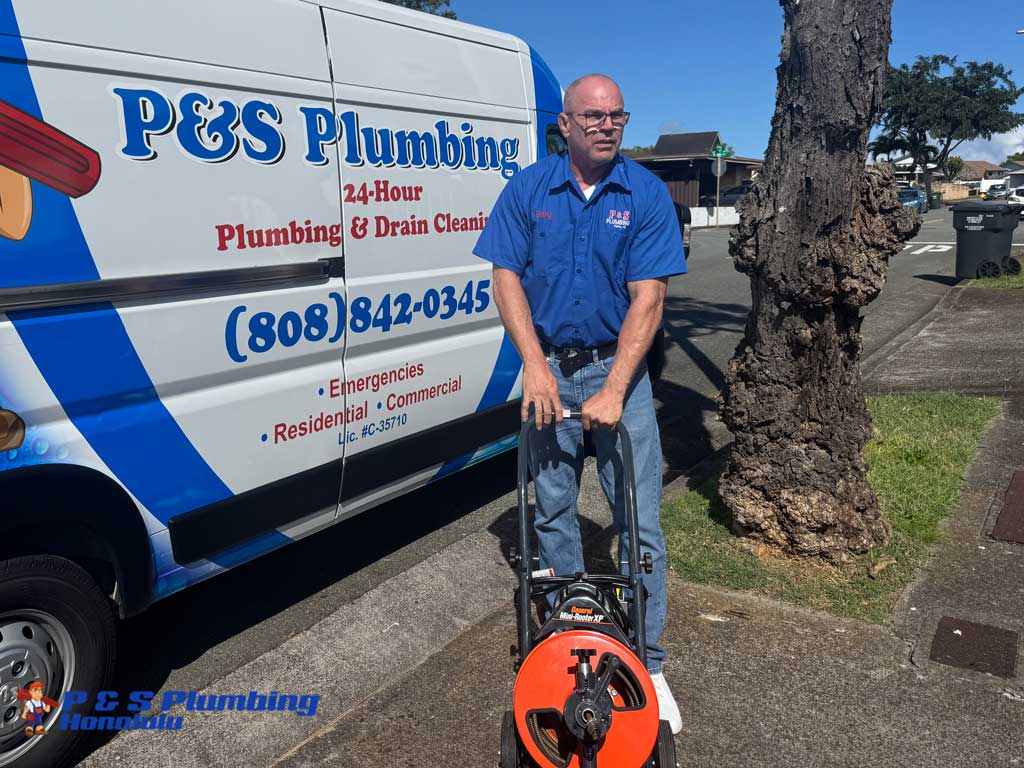
That urgency is real, but the standard should not collapse just because the call is urgent. An emergency plumber still needs to be the right plumber for the work. If the issue involves drains, sewer lines, or certain water heater problems, the narrow emergency repair exception in Hawaii does not erase the licensing requirements that apply to those categories.
There is a practical way to handle this without slowing the response too much. When you call, describe the symptom plainly and ask who will be sent. If the person taking the call dances around the licensing question or cannot explain who performs the actual plumbing work, move on. In an emergency, clarity is more valuable than charm.
I have seen homeowners focus entirely on arrival time and forget to ask what happens after the first visit. That can be a mistake. Some emergencies need immediate stabilization, then a second step once the situation is under control. Ask whether the visit is expected to solve the issue fully that day or whether the company anticipates follow-up work. It is a simple question, but it reveals whether the company is thinking realistically.
Water heater issues deserve a closer look
Few household systems generate as much frustration as a failing water heater. The disruption is immediate, and because the appliance sits quietly until it does not, homeowners are often caught off guard. In Kona, where many properties may also involve solar water heating, that conversation can become more specific.
If you need water heater repair, or especially solar water heater repair, ask the plumber to describe what they believe the issue is and whether the service call is diagnostic, repair-focused, or potentially a replacement discussion. Those are not the same thing, and homeowners should know which conversation they are having.
A trustworthy plumber should also be careful not to oversimplify. No hot water can sound like one obvious problem, but experienced tradespeople know symptoms can overlap. Homeowners do not need a technical lecture. They do need enough explanation to make an informed decision.
The legal piece matters here too. Since Hawaii’s limited emergency exception does not apply to certain heaters, homeowners should treat water heater work as an area where proper licensing is especially important, not optional.
Drains and sewer lines are where shortcuts become costly
Many homeowners treat drain problems as annoyances rather than warnings. Sometimes that is all they are. Sometimes they are the first visible sign of a bigger issue. The reason to take them seriously is not to create alarm. It is to avoid mistaking a symptom for a complete diagnosis.
In Hawaii, the emergency repair exception does not apply to drains or sewer lines. That alone should make homeowners pause before allowing anyone without the proper credentials to start work. Drain cleaning may sound routine, but legally and practically it is not something to treat casually. Sewer line repair raises the stakes even more.
This is one area where the cheapest option can backfire badly. A partial or temporary fix may restore flow for a short time without addressing the underlying problem. If you are hiring for drain cleaning or sewer line repair, ask what the plumber believes they are addressing and what signs would indicate a larger issue. You are not asking for certainty before inspection. You are asking for professional judgment.
That distinction matters because experienced plumbers tend to speak with the right amount of caution. They do not guarantee what they have not yet verified. They also do not pretend every drain issue is minor.
Commercial work calls for a different conversation
Not every Kona property is purely residential. Some homeowners manage rental units, mixed-use spaces, or business properties. In those cases, hiring a commercial plumber or planning commercial plumbing installation is not just a matter of scale. The expectations are different.
Commercial work often has more moving parts, more users affected by downtime, and a stronger need for planning before tools ever come out of the truck. Even when the immediate issue feels familiar, the context changes the job. A leak in a single-family home and a leak in a business setting are not the same operational problem.
If you are discussing commercial plumbing installation, do not treat it like a standard repair call. Ask who handles the work, how the company defines the scope, and whether any related licensed trades may be needed depending on the project. The state guidance on contractor oversight and on wastewater-related projects is especially relevant here, because larger or more complex jobs can involve more than one category of licensed work.
Signs you are talking to someone worth hiring
Homeowners often ask what separates a dependable plumber from a risky one. It is rarely one dramatic clue. More often, it is a pattern of behavior.
- They are direct about licensing and who will do the actual work.
- They explain scope without hiding behind jargon.
- They distinguish between a likely issue and a confirmed diagnosis.
- They do not wave away legal or trade requirements just because the job seems urgent.
- They recognize when a project may require coordination with other licensed work.
Notice what is not on that list. It does not mention a polished website, the friendliest phone manner, or the most aggressive marketing. Those things may be nice to have, but they do not tell you whether the actual plumbing work will be handled properly.
The best tradespeople often communicate in a way that feels calm and unforced. They answer the question you asked. If they do not know enough yet, they say so. If the job has variables, they explain them. That kind of honesty is not a sales trick. It is usually a sign of real experience.
Trust is built before the wrench comes out
A homeowner does not need to become a plumbing expert to make a smart hire. You do not need to know code sections, compare every service van in West Hawaii, or memorize the difference between every type of repair category. But you do need to know what matters most before work begins.
Start with licensing, because in Hawaii that is not optional background information. It is foundational. Understand that the limited emergency exception is narrower than it sounds and does not cover drains, sewer lines, gas lines, or certain fixtures such as heaters and water closets. Ask who will perform the work, not just which company booked the job. If the problem involves water heaters, drains, wastewater concerns, or anything that may expand in scope, ask for a plain-language explanation of what is known and what is still being determined.
The goal is not to make the hiring process adversarial. Good plumbers do not need to be cornered into giving clear answers. They usually provide them willingly. And for Kona homeowners, that is the standard worth looking for. Not just somebody who can get there quickly, but a plumber you can trust to do the work within the rules, explain the trade-offs honestly, and handle your home or property with the kind of professional judgment that holds up after the immediate problem is gone.
Name: P&S Plumbing Kona
Address: 73-5573 Kauhola St Bay #11, Kailua-Kona, HI 96740, United States
Phone: 808-325-3892
Website: https://www.psplumbinghawaii.com/
Email: [email protected]
Hours:
Sunday: Open 24 hours
Monday: Open 24 hours
Tuesday: Open 24 hours
Wednesday: Open 24 hours
Thursday: Open 24 hours
Friday: Open 24 hours
Saturday: Open 24 hours
Time zone: Hawaii-Aleutian Time
Open-location code / Plus code: MXQJ+P4 Kailua-Kona, Hawaii, USA
Map/listing URL: https://www.google.com/maps/search/?api=1&query=Google&query_place_id=ChIJwc_thcwNVHkRhwCIvILuP8w
Embed iframe:
Socials:
https://www.facebook.com/psplumbingkona/
https://x.com/PSPlumbingKona
https://soundcloud.com/p-s-plumbing-kona
https://www.youtube.com/@PSPlumbingKonaHawaii
P&S Plumbing Kona provides plumbing services from its Big Island headquarters on Kauhola Street in Kailua-Kona.
The official website lists Kona phone service at 808-325-3892 and also lists Hilo and Honolulu service contacts.
P&S Plumbing provides residential plumbing, commercial plumbing, drain and sewer service, water heater work, plumbing repairs, leak detection, fixture repair, kitchen plumbing, bathroom plumbing, and emergency plumbing support.
The official site lists the Big Island headquarters at 73-5573 Kauhola Street, Bay 11, Kailua Kona, HI 96740.
The company’s official site lists Hawaii State License Number CT-35710 and describes P&S Plumbing as licensed and insured.
Customers can contact P&S Plumbing Kona for drain cleaning, sewer-line concerns, water heater service, clogged toilets, fixture repairs, plumbing leak detection, pipe-lining needs, bathroom remodeling plumbing, kitchen plumbing, commercial plumbing, and urgent plumbing requests.
For plumbing service in Kailua-Kona and West Hawaii, call 808-325-3892 or visit https://www.psplumbinghawaii.com/
The public map listing uses plus code MXQJ+P4 Kailua-Kona, Hawaii, USA and can help customers find P&S Plumbing Kona near Kauhola Street.
Popular Questions About P&S Plumbing Kona
What does P&S Plumbing Kona provide?
P&S Plumbing Kona provides plumbing services for residential and commercial customers, including drain cleaning, sewer and drain service, water heater service, plumbing repairs, fixture repair and installation, leak detection, kitchen plumbing, bathroom plumbing, and 24-hour emergency plumbing.
Where is P&S Plumbing Kona located?
The official contact page lists the Kona location at 73-5573 Kauhola Street, Bay 11, Kailua Kona, HI 96740. The listing address is 73-5573 Kauhola St Bay #11, Kailua-Kona, HI 96740, United States.
What phone number should Kona customers call?
The official website lists Kona phone number 808-325-3892.
What is the email address for P&S Plumbing Kona?
The email address is [email protected].
What are P&S Plumbing Kona’s hours?
The listing hours show P&S Plumbing Kona as open 24 hours a day, seven days a week, Hawaii-Aleutian Time. The official website also references 24-hour emergency plumbing service.
Is P&S Plumbing licensed?
The official website lists Hawaii State License Number CT-35710. Customers can confirm license status directly with the relevant Hawaii licensing authority before hiring.
Does P&S Plumbing Kona offer emergency plumbing?
Yes. The official website references 24-hour emergency plumbing service and emergency services availability.
Does P&S Plumbing handle water heaters?
Yes. The official website lists water heater installation and repair, including tankless, solar, conventional water heaters, and boiler setup and repair.
What areas does P&S Plumbing serve from Kona?
The official service-area page lists Big Island / Kona communities including Kona, Holualoa, Kukio, Waikoloa Village, Kalaoa, Captain Cook, Kahaluu-Keauhou, Keauhou, Kainaliu, Waimea, Puako, and Kealakekua.
How do I contact P&S Plumbing Kona?
Call 808-325-3892 or visit https://www.psplumbinghawaii.com/. Social profiles: Facebook, X, SoundCloud, and YouTube.
Landmarks Near Kailua-Kona, HI
Kauhola Street: The street listed for P&S Plumbing Kona’s Big Island headquarters and a practical reference point for the Kailua-Kona location.
Queen Kaʻahumanu Highway: A major West Hawaii route connecting Kailua-Kona, Kona International Airport, Waikoloa, and nearby coastal communities.
Ellison Onizuka Kona International Airport: A major transportation landmark north of Kailua-Kona and near local service routes.
Kailua-Kona town: A central West Hawaii community served by local plumbing contractors.
Old Kona Airport State Recreation Area: A well-known Kailua-Kona landmark near residential and commercial areas.
Kailua Pier: A central waterfront landmark in Kailua-Kona and a common local reference point.
Aliʻi Drive: A major coastal route with homes, condos, restaurants, shops, and visitor properties.
Honokōhau Harbor: A marina and commercial harbor area near Kailua-Kona and local business routes.
Kaloko-Honokōhau National Historical Park: A major cultural and coastal landmark north of Kailua-Kona.
Keauhou: A South Kona community with homes, condos, resorts, and plumbing service needs.
Holualoa: An upland Kona community with residential properties and local businesses.
Waikoloa Village: A West Hawaii community listed on P&S Plumbing’s service-area page.
Waimea: A Big Island community listed on P&S Plumbing’s service-area page.
Kealakekua: A South Kona community listed on P&S Plumbing’s service-area page.
Captain Cook: A South Kona community listed within P&S Plumbing’s Big Island / Kona service-area references.
For residential plumbing, commercial plumbing, drain cleaning, sewer-line repair, water heater service, leak detection, fixture work, bathroom plumbing, kitchen plumbing, or 24-hour emergency plumbing near these Kailua-Kona and West Hawaii landmarks, contact P&S Plumbing Kona at 808-325-3892 or visit https://www.psplumbinghawaii.com/
❧